The Global South House: Building a Political Home for Philanthropy From and For the Global South
By Jonathas Azevedo, Executive Director of Rede Comuá and Juliana Tinoco, Executive Coordinator of the Alianza Socioambiental Fondos del Sur
The climate, environmental, and social crises are deeply intertwined, and their consequences fall disproportionately on the peoples and territories of the Global South. Despite this, most resources allocated to climate action remain concentrated in traditional financing mechanisms, disconnected from the realities of the communities and organisations that resist the toughest consequences of these crises, while creating and proposing real solutions to global challenges.
In this context, The Global South House emerges — a platform to promote and strengthen the field of financing and philanthropy from and for the Global South, projecting itself to the world as a space of articulation, engagement, and influence. This initiative comes to life thanks to the collaboration between two sister networks: the Alianza Socioambiental Fondos del Sur (Socio-environmental Funds of the Global South) and Rede Comuá.
The proposal originates from the experience of the Alianza, an intercontinental network currently composed of 16 socio-environmental funds that, throughout its history, has channelled more than USD 93 million in direct support to communities and strategic territories across the Global South. Since its creation, the Alianza has worked for socio-environmental justice — an approach that weaves together climate justice, environmental justice, and social justice, recognising that none can be addressed without the others.
The Alianza’s mission is to strengthen activist philanthropy actors from the Global South, who are rooted in their territories, creative in resource mobilisation, and committed to a more just and equitable philanthropic practice. It aims to foster community among those who are building, from the South, a new architecture of financing.
Rede Comuá, in turn, brings over 12 years of experience in Brazil as a convener of independent donor organisations committed to socio-environmental justice, human rights, and the strengthening of civil society. A clear political project has marked its trajectory: to influence philanthropy to become more giving, closer to real struggles, and more committed to democracy and rights.
Building a political home
The Global South House is both a concrete and symbolic space, designed to bring together actors in the philanthropic field from and for the Global South. More than a physical place, it is a political home: a platform to amplify voices, strengthen alliances, generate and share knowledge, and influence international debates on financing and power for climate, nature, and people.
Its first physical edition will take place in Belém do Pará, one of the capitals of the Brazilian Amazon, during the 30th United Nations Climate Change Conference (UNFCCC COP30). But its construction is already underway — the result of a collective journey and the trust of organisations that believed from the beginning in the strength of this space.
Among the key partners of this edition at COP30 are the Community Funds of the Brazilian Amazon Network (Rede de Fundos Comunitários da Amazônia Brasileira) and the global movement #ShiftThePower.
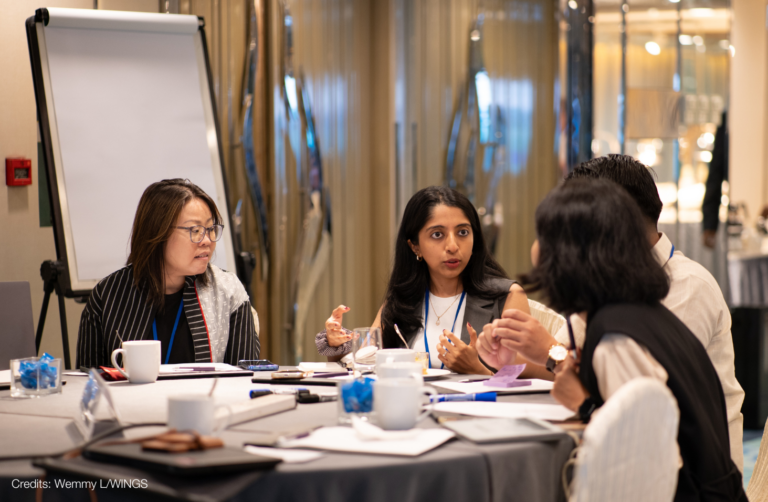
Throughout the year, preparatory meetings have been held in a journey towards COP30 that brought together representatives of the 40 organisations and funds that make up The Global South House. These spaces have been essential to reaffirm bonds and shared positions, and will culminate in a manifesto that weaves together the common causes of all.
A global mutirão for fair financing
The Brazilian government has presented the idea of a Global Mutirão as a form of decentralised climate mobilisation, rooted in solidarity and collective action. For communities in the Global South, this spirit is not new: for decades, movements and community funds have been practising exactly this.
The Global South House will therefore be an opportunity to show the world that socio-environmental justice funds and organisations from the Global South are already creating transformative financing solutions. They know the territories, build relationships of trust, and help keep forms of resistance and adaptation alive in the face of our time’s multiple, interconnected crises.
Programming and next steps
The Global South House programme during COP30 will take place from November 12 to 20, 2025, in Belém, with activities promoted by founding, partner, and supporting organisations. The focus will be on financing for socio-environmental justice, with debates on resource flows and power dynamics, alongside the exchange of experiences and solutions already being implemented in the Global South.
The final agenda will be defined by an independent Curatorial Committee and launched in October. But since its launch in July of this year, The Global South House has remained active through digital campaigns, inviting organisations and individuals to join forces in this political and collective mutirão.
In addition to debates, The Global South House also seeks to be a space of welcome and connection, amplifying voices and relationships beyond physical walls. The entire programme will be livestreamed and feature interpretation in three languages, ensuring global participation.
An open invitation
“The Global South House is a platform to bring together actors who share values, principles, and practices, and who want to build, together, a political home. We created this collective space to amplify Global South voices in debates on resource flows and power dynamics. This is our invitation.”
The invitation is clear: joining the mutirão of The Global South House is to affirm that another model of financing is possible — one that is fairer, closer to territories, and more committed to rights and to the collective future of the planet.
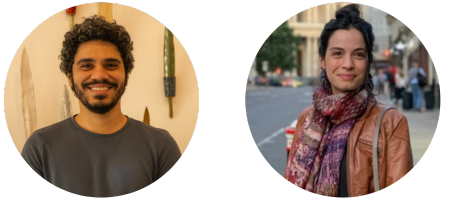
Jonathas Azevedo holds a Bachelor’s degree in International Relations from the Fluminense Federal University, a specialization in Humanitarian Aid and Development from PUC-Rio, and a Master’s in Social Innovation and Entrepreneurship from the London School of Economics and Political Science. He has worked in project management, monitoring, and evaluation, as well as partnership building in Brazil and Haiti, with a focus on human rights, community engagement, and violence reduction.
Juliana Tinoco has spent two decades strengthening narratives around environmental and climate agendas, connecting them to social issues. Her work focuses on advocacy, partnerships and institutional relations, knowledge dissemination, communication and engagement strategies, multimedia projects, and fostering dialogue with diverse audiences.
To get first access to our blogs every month, subscribe to our newsletter here.