Powering Asia’s Philanthropy Boom: Why Investing in Talent and Capacity Matters Now
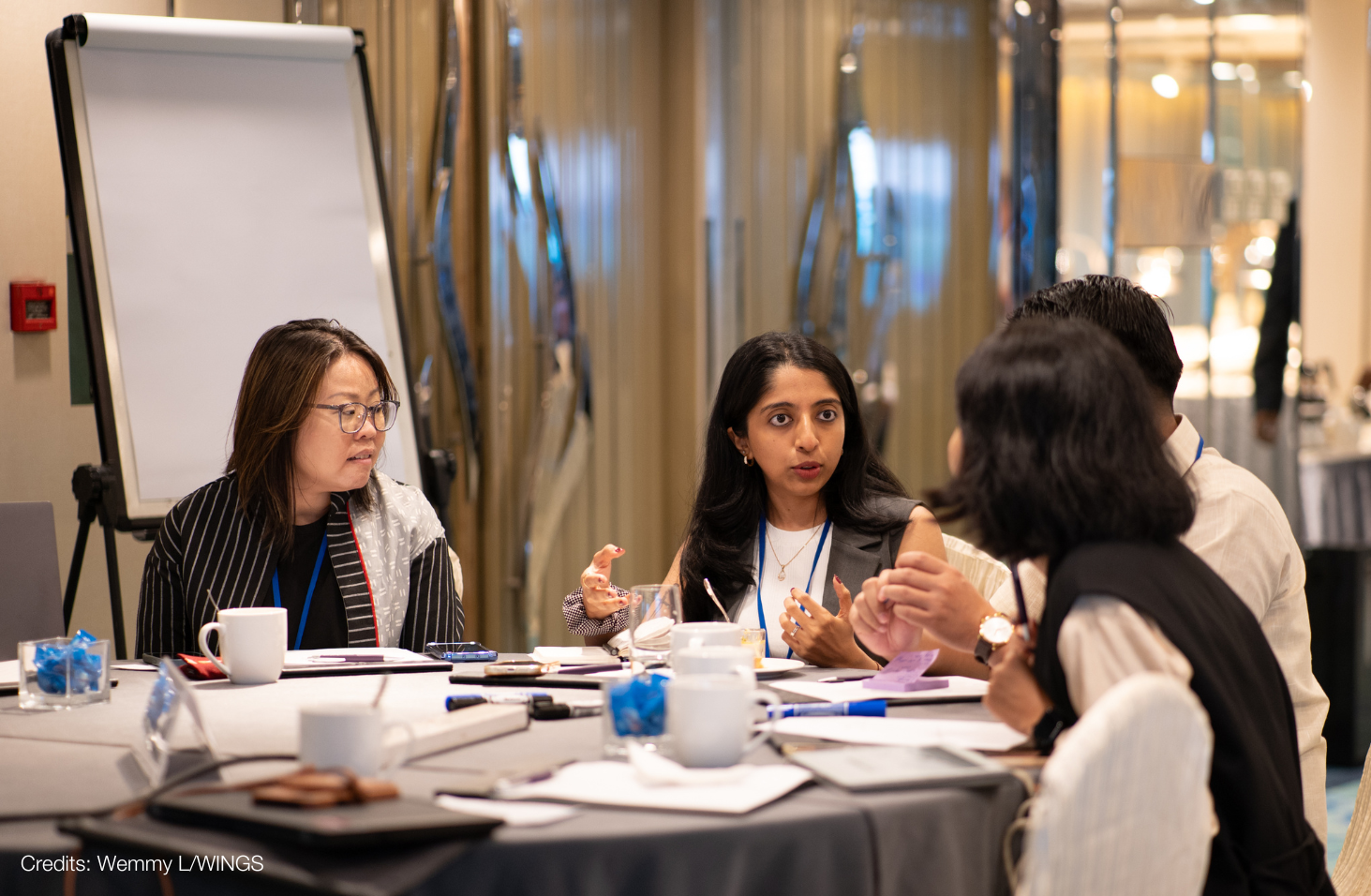
By Priyanka Nair, Research Associate – Centre for Philanthropy for Inclusive Development at the Indian School of Development Management (ISDM).
Asia holds a growing share of the world’s philanthropic capital. But the real question is no longer how much money is available — it is whether the sector has the talent and institutions needed to use that capital well. Without strong capability, even large resources cannot deliver a lasting impact.
Despite this growth, advisory capacity is thin, intermediaries remain fragmented, and the sector’s most pressing need is for people who can work across complexity. When capital moves without capability, the result is often weak problem diagnosis, poor community-centred design, and duplicated effort.
Asia’s philanthropy boom will only translate into lasting impact if talent is professionalised across the ecosystem – wherever capital is received, designed, and deployed.
Professionalisation is underway
Encouragingly, demand for professional capacity is rising across Asia’s philanthropy ecosystem.
Asia now accounts for 36% of global wealth, growing 1.7 times faster than the global average¹. Singapore, Hong Kong, India, and the United Arab Emirates (UAE) are fast emerging as hubs that house capital, talent, and cross-border philanthropy. Rapid wealth creation and the rise of domestic capital—as international aid recedes—have increased the demand for professional capacity across Asia. At the same time, the institutionalisation of family giving and intergenerational wealth transfer is reshaping how philanthropy is practised. Family offices that once relied on informal peer networks are increasingly seeking structured support, a shift especially evident among next-generation and intergenerational givers.
In response, the philanthropy support ecosystem across Asia is steadily maturing. Philanthropy-first organisations, service providers, ecosystem enablers, and wealth institutions are expanding their roles, while financial institutions, universities, and research centres are establishing dedicated philanthropy practice arms. Regional networks are pooling capital, commissioning research, and convening stakeholders, offering masterclasses, peer learning forums, curated giving journeys, and knowledge resources that help donors move from ad hoc charity to more strategic, evidence-led giving.
These efforts are creating demand for skilled ecosystem builders and enabling cross-border talent mobility.
Building formal talent pathways
To sustain momentum, social impact must be recognised as a skilled profession — not only voluntary work. Early examples of this system-building are already emerging.
- Government-supported infrastructure: Singapore has invested in coordinated, government-supported infrastructure to develop social-sector talent. The Social Service Institute (SSI), operating under the National Council of Social Service and recognised by SkillsFuture Singapore, serves as the sector’s continuing education and training centre.
- Rise of specialised courses in social impact: Universities and business schools are introducing dedicated social impact and nonprofit management tracks, while specialised development management institutions are preparing leaders for the complexities of the social sector. Programmes range from postgraduate degrees and executive courses with mandatory community immersions. Shorter routes are also emerging, where dedicated wealth management institutions and philanthropic networks offer certificate programmes for professionals.
- Talent demand is becoming increasingly regional: Families and capital are relocating across hubs such as Singapore, the UAE, Hong Kong, and India, creating cross-border giving priorities. Building the pipeline, therefore, means not only producing more talent locally but enabling mobility across Asia’s interconnected ecosystems. There is growing recognition that pathways must be designed ‘in Asia, for Asia grounded in regional realities. Initiatives like the Philanthropy Commission Asia and philanthropy networks like WINGS, AVPN, Philanthropy Asia Alliance and are advancing this agenda by calling for stronger talent pipelines, shared standards and cross-border collaboration. They also challenge the uncritical import of Western frameworks of philanthropy. Despite these efforts, supply still lags demand and formal academic programs and career pathways in social change and philanthropy require refinement.
- The role of development management: There is an assumption that successful business executives can seamlessly transfer their skills to the social sector. Development Management (DM) challenges this. It is not business management repurposed, but a distinct discipline for leading large-scale social and systemic change. Social change unfolds amid inequality, uncertainty, power dynamics, and competing priorities; it cannot be linear or value-neutral.
This reframes how we define talent. Competence includes not only technical skills of finance, policy, and technology, but of humility, contextual sensitivity, and comfort with ambiguity. Lived experience becomes a form of expertise, community knowledge counts as intelligence, and reflection becomes as important as execution.
Capacity and governance as critical infrastructure: What India’s experience tells us
While there are pathways strengthening the supply of talent into the sector, the real capacity gaps become more visible in organisations expected to deliver impact. India provides a useful case in point.
- Governance gaps: Many Social Purpose Organisations (SPOs)2 in India face a ‘missing middle’ in management, where passionate founders and committed frontline staff are separated by a thin or absent management layer, limiting systems-building, governance, and scale. Limited talent prevents growth, while limited growth prevents investment in talent, a persistent catch-22. Compensation patterns further worsen this problem, with salaries averaging nearly 57–58% lower than general industry and pay gaps widening at mid and senior levels, limiting both talent attraction and career progression3.
- Talent constraints: Low pay and scarce training make it hard for philanthropy support organisations to attract and retain skilled professionals4.
- Leadership disconnect: Community workers remain stuck in support roles without pathways to develop leadership competencies, while senior leadership often lacks lived local experience.
At the same time, India offers some of the region’s most promising experiments in capacity-building, from results-based programme management, governance-focused training, to frontline leadership development. These efforts are making organisations more ‘findable and fundable’, to earn trust and deploy resources effectively.
The irony is that in moments of crisis, capacity-building funds are often the first to be scaled back by donors. Without it, organisations cannot absorb even the funding they receive. Capacity-building must become a grant norm, supported by structured roles like capacity-building leads in philanthropies and Learning and Organisational Development (L&OD) functions within SPOs.
What the sector needs to move from capital to capability
What Asian philanthropy needs now is straightforward: sustained investment in its own talent and institutions.
Donors must treat capacity-building as a core programme strategy and not an optional overhead. The ecosystem must be backed by strong training pipelines, credible credentials, fair compensation, and sector skill councils to set shared regional standards. Recognising development management as skilled work and building clear career pathways are essential to strengthening practice across the region.
Turning this vision into reality requires investing in educational institutions that shape socially committed leaders and building clear pathways into public systems and philanthropy. These investments will enable development managers to operate across civil society, government, and markets, translating ideas into grounded impact and building institutions and movements that endure.
As capital grows, capability must grow with it. That is what will turn Asia’s philanthropic momentum into lasting, equitable impact
Acknowledgement: This blog draws on conversations and insights shared by colleagues from Dasra, ISDM and Arun Khanna – ISDM’s Lead Advisor South-East Asia.
- Commission on Asian Philanthropy, “New Commission on Asian Philanthropy to Unleash the Full Potential of Asian Philanthropy for Social Good,” AVPN, September 2024
- A Social Purpose Organisation (SPO) is any organisation whose primary objective is to create social impact, regardless of its legal status. SPOs are categorised into three groups: non-governmental organisations and social enterprises, ecosystem support organisations, and funding organisations.
- Korn Ferry. (2022). Compensation Benchmarking in the Indian Social Sector.
- Dasra. (2025). Building Blocks: A Primer on India’s Philanthropy Support Ecosystem
To get first access to our blogs every month, subscribe to our newsletter here.