
When Policy Exists, but Certainty Does Not: Rethinking Enabling Environments for Philanthropy
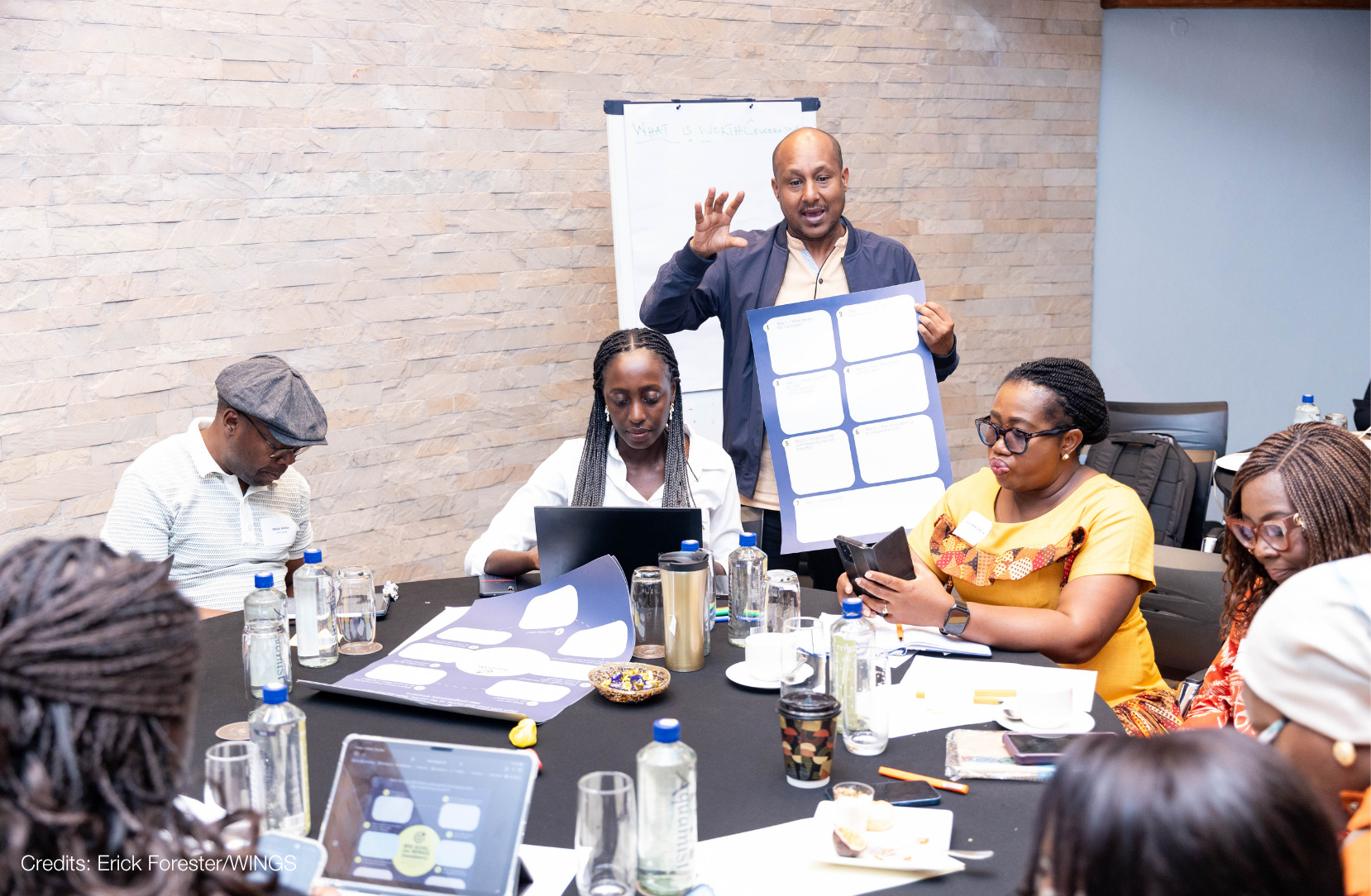
Photo by: Erick Forester/WINGS
By Dawit Taddele Dessie, East Africa Philanthropy Network
Across much of Africa, the question of whether the environment for philanthropy is enabling cannot be answered by legislation alone. Most countries have laws that recognise non-profit or public benefit organisations. Many include provisions for tax exemptions, incentives for giving, or regulatory safeguards meant to support civic action. On paper, these frameworks often look adequate. The difficulty begins once organisations attempt to operate within them.
For many practitioners, the real issue is not whether these tax or regulatory exemptions exist, but whether they are accessible, predictable, and applied consistently in practice. In some contexts, organisations can plan with a reasonable level of confidence. In others, exemptions are revisited annually, interpreted differently by different authorities, or delayed without explanation. Donor incentives may be legally provided for, yet capped so tightly, or administered so slowly, that their practical value is limited.
Layered onto this are expanding reporting requirements, new digital compliance systems, and growing attention to data protection, often introduced without sufficient guidance or investment in institutional capacity. The result is rarely an openly hostile environment – but it is also rarely one that feels stable, especially for organisations working across borders, hosting funds, or relying on long-term philanthropic commitments.
This gap between legal intent and operational reality is not unique to one country. Across the African continent, it is an increasingly shared experience.
What ‘enabling’ looks like in practice
When philanthropy actors speak candidly with one another, a different definition of an enabling environment emerges. It is less about perfect legislation and more about clarity over time – about understanding how rules are applied, not just how they are written. It is about administrative systems that function at the same pace as the organisations they regulate.
Across Anglophone, Francophone, and Lusophone contexts, similar patterns are emerging. National laws may be relatively clear, while implementation varies sharply at local levels. Digital systems promise efficiency, yet introduce new exclusions. Civic space protections exist in principle, but feel fragile under political pressure.
What becomes apparent is that many philanthropy support organisations1 are solving the same problems in isolation – interpreting regulations, negotiating with authorities, or adapting their models to shifting rules without a shared space to compare insights or coordinate responses.
This shared experience led to the formation of the Circle of Collaboration on Enabling Environment and Advocacy for Philanthropy. The Circle is one of four action-oriented groups within the newly launched WINGS Africa Working Group, alongside circles focused on:
- Community Philanthropy & Local Giving Ecosystems
- Knowledge, Learning & Data for Philanthropy
- Strategic Capital Flows & Financing for Philanthropy
A practical, peer-led response
The Circle was launched in November 2025 in Nairobi, alongside the WINGS Africa Working Group, as a deliberate move toward smaller, more action-oriented collaborations. Rather than another broad forum, the intention was to build a focused space where organisations already working on legal frameworks, fiscal hosting, advocacy, and civic-space protection could learn directly from one another.
Members come from different legal systems and political contexts, but many face comparable constraints: regulatory uncertainty, fragmented data on policy trends, limited inclusion of non-Anglophone actors, and advocacy efforts that are often reactive rather than strategic. For example, members such as the East Africa Philanthropy Network, CIVICUS, Legal Services Facility, SIVIO Institute, Southern Africa Trust, STAR Ghana Foundation, Ghana Philanthropy Forum, Rockefeller Philanthropy Advisors, TrustAfrica, Philanthropy Ghana, and Giving Tuesday Africa all navigate these challenges while working to strengthen philanthropic advocacy and coordination across the region. The Circle is not intended to replace national research or formal policy dialogues. What it really does is let people share what they are seeing across different countries, spot trends before they become big problems, and give members a stronger footing when policy decisions come up, rather than reacting after the fact.
Through this lens, research becomes one input among many, rather than the centre of the conversation.
Where the work is focusing now
In the early conversations, the Circle has focused primarily on mapping what already exists.
Members are pulling together data, research, case studies, and tools from their own networks, while also beginning to surface where the evidence base remains uneven or incomplete. Regulatory intelligence, for example, is still scattered, comparative insight across contexts is limited, and participation from Francophone and Lusophone actors continues to be constrained by language and resourcing, despite strong interest and relevant expertise.
The commitments emerging from these discussions include:
- Building a living repository of research and data on enabling environments
- Coordinating communications across networks
- Setting regular meeting rhythms
- Creating a small translation fund to make key materials accessible to Francophone partners
These efforts recognise that strengthening enabling environments depends as much on collaboration and knowledge sharing as on policy change itself.
The planned repository will focus on existing research and materials on countries’ legal frameworks for civil society, consolidating them in a central location to strengthen knowledge sharing and guide advocacy and decision-making. This work unfolds slowly, with milestones stretching across months, from uploading resources and featuring a ‘Resource of the Month’ to engaging Francophone and Lusophone partners. Though incremental, this work is essential to building a stronger shared knowledge base.
Why this moment matters
As policy discussions unfold across the region, there is a risk that talk about enabling environments stays removed from everyday realities. The Circle focuses on what actually makes organisations work and what gets in their way. At the same time, the Circle’s purpose goes beyond influencing policy conversations alone. Its impact will not be measured solely by policy wins, but by the extent to which philanthropic actors feel more confident navigating regulatory change, anticipating policy shifts, and acting collectively rather than in isolation. Rather than promoting a single model, the Circle seeks to cultivate the conditions in which practical, peer-informed approaches can emerge, adapt, and endure across different contexts.
- Philanthropy support organisations, sometimes referred to as ‘intermediary’ or ‘infrastructure’ organisations, include entities that provide a variety of services to support and strengthen philanthropy in a region or around a theme. Philanthropy support organisations usually do not directly fund or implement philanthropic programmes themselves, but rather provide services to support those that do. That said, some philanthropic funders do provide ecosystem support services too, so the distinction is not always clear-cut. https://wings.issuelab.org/resource/understanding-the-meaning-of-terms-definitions-and-taxonomy.html?_gl=1*oz3rb2*_ga*Njk4ODY0NzAwLjE2MjMyNTcxNTM.*_ga_5W8PXYYGBX*MTYzMTE4Nzk0MS4yMi4xLjE2MzExODgyNDguM
Dawit Taddele Dessie is a seasoned operations and strategy expert whose career is characterised by a profound dedication to utilising technology for impactful societal change. With over fifteen years of experience, he has significantly influenced the civil society sector, driving advancements across international NGOs, research institutions, and corporate entities. He holds a Master of Arts in Sustainable Development, specialising in Development Management, Policy Analysis, and Advocacy.
To get first access to our blogs every month, subscribe to our newsletter here.