From Research to Practice: What Latin America Is Learning About Philanthropy and Multi-Stakeholder Partnerships
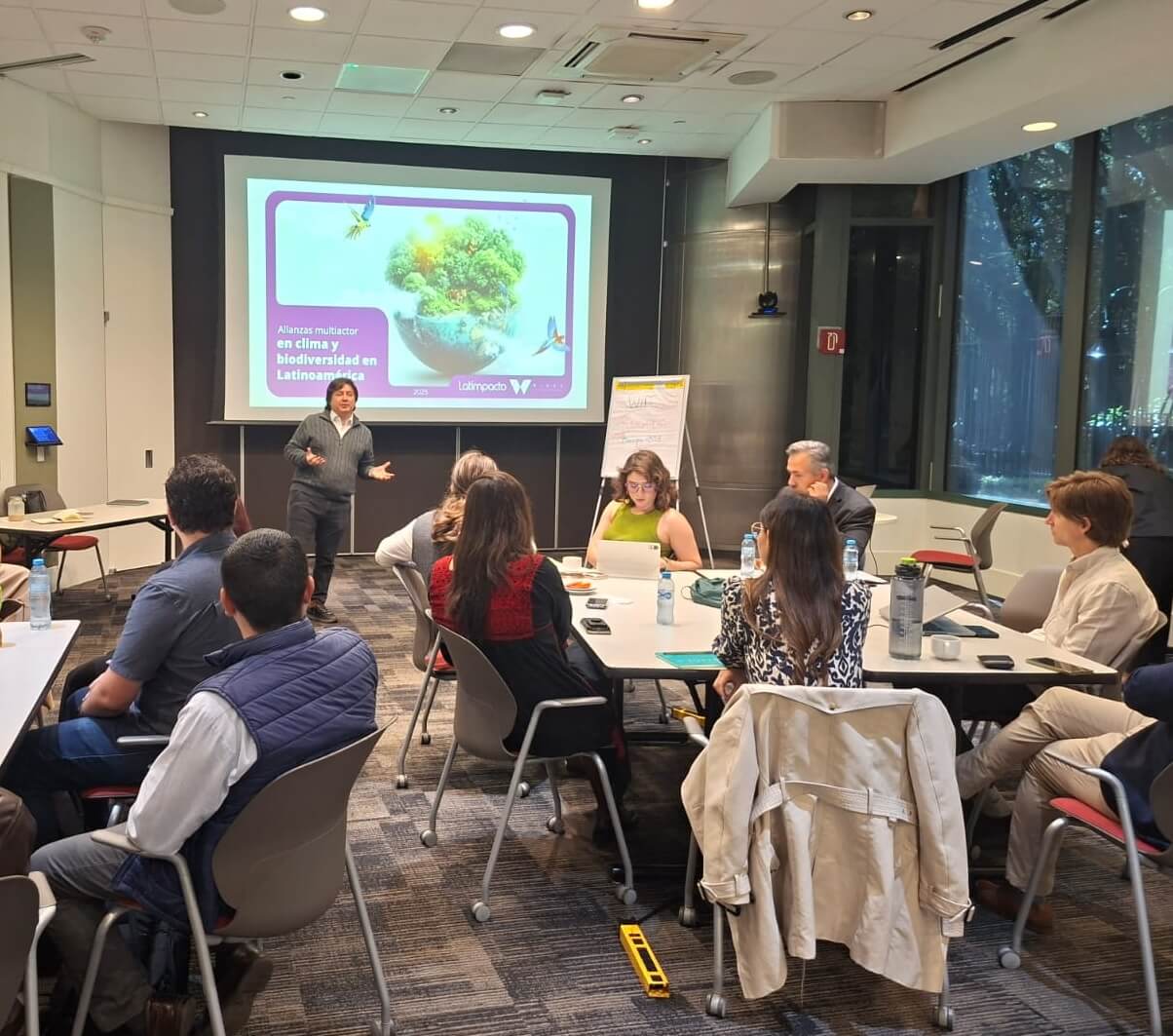
Photo by Latimpacto
By Paula Andrea Ramírez Méndez, Program Manager at Latimpacto
In Latin America and the Caribbean, multi-stakeholder partnerships are increasingly recognised as essential for addressing the interconnected crises of climate change and biodiversity loss. Yet one of the clearest lessons from Latimpacto and WINGS’ work in the region is that evidence alone is not enough. Research can identify what makes partnerships effective, but turning those insights into practice requires more than sharing findings. It requires building capacities, changing narratives, strengthening trust, clarifying roles and creating practical pathways for philanthropic organisations to act.
In 2025, Latimpacto and WINGS developed the report, Multi-Stakeholder Partnerships in Latin America for Climate and Biodiversity, which mapped 13 partnership experiences across the region. The research showed that these collaborations are already helping mobilise resources, connect actors and implement solutions in areas such as biodiversity conservation, climate adaptation, water security and sustainable production. Of the cases analysed, six had a regional scope, reflecting the cross-border nature of environmental challenges. Biodiversity conservation and climate adaptation were the most frequent themes, present in four and five initiatives, respectively.
The cases also offer concrete examples of the region’s diverse partnerships. The Latin American Water Funds Partnership, which includes The Nature Conservancy, the Inter-American Development Bank, the Global Environment Facility and FEMSA Foundation, works to improve water security through watershed conservation, water quality and climate resilience. According to the mapping, it has raised up to US$7 million and benefited more than 14 million people. The Pan-Amazonian Bioeconomy Network, meanwhile, brings together civil society, Indigenous and local actors, investors, multilateral organisations and philanthropy to promote a sustainable, locally led bioeconomy across the Amazon.
The report also revealed important gaps. Many partnerships focus on implementation and resource mobilisation, while fewer are centred on policy influence. They often face fragmented decision-making, limited financing, power imbalances, weak market conditions, difficulties in measuring long-term impact and the challenge of sustaining trust over time. Philanthropy plays a crucial but often under-recognised role in this landscape, acting as a catalyst for innovation, resource mobilisation and inclusive governance.
The question, then, is how to make these findings useful for organisations in practice.
Turning evidence into a learning experience
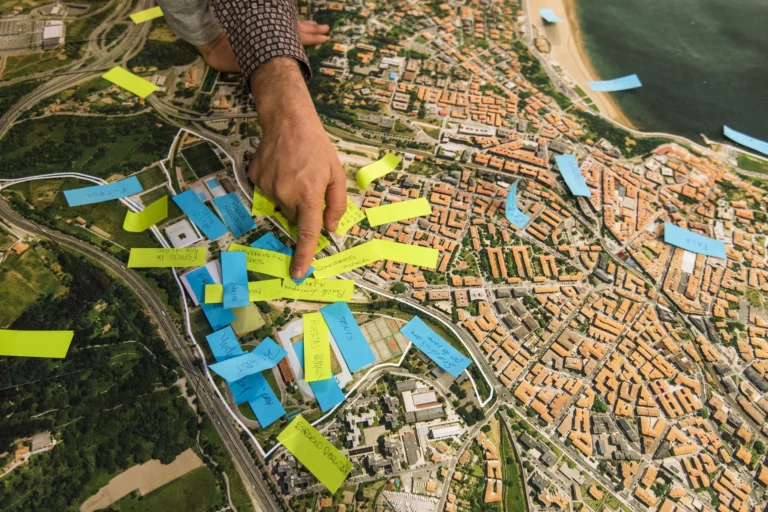
Rather than leaving the findings in a report, Latimpacto developed a practical learning tool: a multi-stakeholder partnership board that guides participants through four stages of building a partnership. The tool was designed to help organisations understand the roles they can play, the good practices they can apply, and the risks and tensions they may encounter when working across sectors.
Using this board, Latimpacto, WINGS and regional partners organised workshops in Mexico, Brazil and Colombia with philanthropic organisations and other ecosystem actors. These sessions were not designed only to disseminate research. They were spaces to test how evidence could become dialogue, self-reflection and practical action.
The conversations confirmed one of the research’s strongest messages: philanthropy’s value goes far beyond funding. In the workshops, participants repeatedly identified roles such as convening actors, generating trust, facilitating dialogue, strengthening capacities, mobilising investment and acting as a catalyst for innovation.
In Mexico, when participants were asked what role their organisations could play in a multi-stakeholder partnership, the most selected answers were generating trust, convening actors, facilitating dialogue, financing and strengthening capacities. In Brazil, mobilising actors was by far the most selected role, followed by financing and strengthening capacities. These differences should not be read as a strict comparison between countries, but rather as reflections of the specific composition, priorities, and context of each group. The same methodology surfaced different starting points, which is precisely why practical tools need to be adaptable to each ecosystem.
This matters because it challenges a narrow view of philanthropy as a source of grants. In practice, philanthropy can create safe spaces for dialogue, connect actors who do not usually work together, finance early-stage collaboration, support local organisations, generate evidence and reduce risks that often prevent other actors or forms of capital from entering. This can include financing feasibility studies, supporting community consultation, strengthening governance, covering coordination costs, funding pilots, generating data and absorbing early-stage uncertainty before public, private or commercial capital is ready to engage.
From reflection to organisational readiness
As part of this practical phase, the workshops were complemented by a diagnostic exercise with philanthropic organisations in Colombia, Brazil and Mexico. The purpose was to understand their starting point, previous experience, good practices and main challenges in leading or participating in multi-stakeholder partnerships for climate and biodiversity.
The diagnostic assessed eight dimensions: strategic identity; experience in climate and biodiversity projects; relational and cross-sector capacity; impact measurement; culture of collaboration; governance, equity and inclusion; financial innovation and catalytic capacity; and readiness to lead multi-stakeholder processes.
This exercise helped move the conversation from general reflection to organisational self-assessment. It allowed each organisation to identify where it is already strong and where it needs to build further capacity. Based on these results, the next step will be to develop practical work plans with participating organisations, so they can move from intention to action and strengthen their ability to lead concrete partnerships in climate and biodiversity.
The narratives we need to change
The workshops also showed that stronger partnerships require a shift in narrative. Participants in Mexico and Brazil emphasised the need to move away from seeing philanthropy as charity, short-term aid or a purely financial contribution.
This was not a separate conversation from the practical work; it was a prerequisite for it. If philanthropy is understood only as money, its role in partnerships will remain limited. If communities are seen only as beneficiaries, partnerships risk reproducing unequal power dynamics. But if philanthropy is understood as a facilitator, catalyst, connector and learner, it can help build the conditions for more equitable and effective collaboration.
Participants said that philanthropy should be recognised as catalytic, strategic, facilitative, community-centred and capable of building trust. These words point to a deeper transformation: philanthropy is being asked not only to support solutions, but to help shape the ecosystems that make solutions possible.
What makes partnerships difficult?
The workshops also highlighted the practical barriers that prevent philanthropy from taking on a more active role in partnerships. Participants highlighted short-term funding, lack of trust among actors, difficulties in measuring impact, limited capacities to articulate partnerships, unfavourable regulatory frameworks, differences in priorities across sectors, and limited private sector participation.
These barriers are not unique to Latin America. They are common across many regions and help explain why multi-stakeholder partnerships are often easier to promote than to implement. Collaboration requires time, coordination, shared language and clear governance. It also requires actors to recognise differences in power, incentives and expectations.
Another important finding was the difficulty of engaging certain actors. In both Mexico and Brazil, participants identified governments, the private sector, investors and development banks as among the most difficult actors to involve. This points to a major challenge for climate and biodiversity partnerships: the actors needed for systemic change are often the hardest to bring into sustained collaboration.
What makes partnerships work in practice?
The workshops and diagnostic exercises reinforced several lessons that may be relevant beyond Latin America.
First, partnerships must be built from context. Climate and biodiversity challenges are deeply territorial, and solutions must include the voices, knowledge and priorities of local communities and Indigenous Peoples from the beginning.
Second, trust is not a soft issue; it is core infrastructure. Without trust, partnerships become transactional, fragmented or extractive. With trust, they can become spaces for shared risk, learning and long-term action.
Third, philanthropy can help move partnerships from intention to implementation by financing the invisible work of collaboration: facilitation, coordination, listening, capacity building, evidence generation and relationship-building. These elements are often difficult to fund, but they are essential for lasting impact.
Fourth, multi-stakeholder partnerships can help connect different types of capital. Climate and biodiversity solutions rarely scale through grants alone, but they also rarely begin with purely commercial investment. They often require a combination of philanthropic, catalytic, concessional, patient and commercial capital, each playing a different role in reducing risk, strengthening capacities and making solutions more investable over time.
This is where philanthropy has a unique opportunity. By acting as a catalyst, it can help build bridges between communities, civil society, governments, investors and the private sector. It can support the early stages of collaboration and help create the conditions for other actors and forms of capital to engage more effectively.
The transition from research to practice is never linear. It requires experimentation, adaptation and humility. But the conversations in Mexico, Brazil and Colombia suggest that the region is already moving in an important direction: from asking whether collaboration matters to asking what it takes to make collaboration work.
For philanthropy, the answer is becoming clearer. Its role is not only to fund change, but to help convene, connect, de-risk, strengthen and sustain the ecosystems where change becomes possible.

Paula Andrea Ramírez Méndez is a Strategic Corporate Communications Specialist, certified in business change management and innovation. She is experienced and skilled in the structuring, design, implementation, and evaluation of projects and strategies aimed at building partnerships and positioning social and environmental issues. She brings a comprehensive vision to mobilise purpose-driven audiences and initiatives, create value at every stage of project development, and integrate different areas through communication and corporate engagement.