From Resilience to Resistance: Why Funding Civil Society Should Be an End in Itself
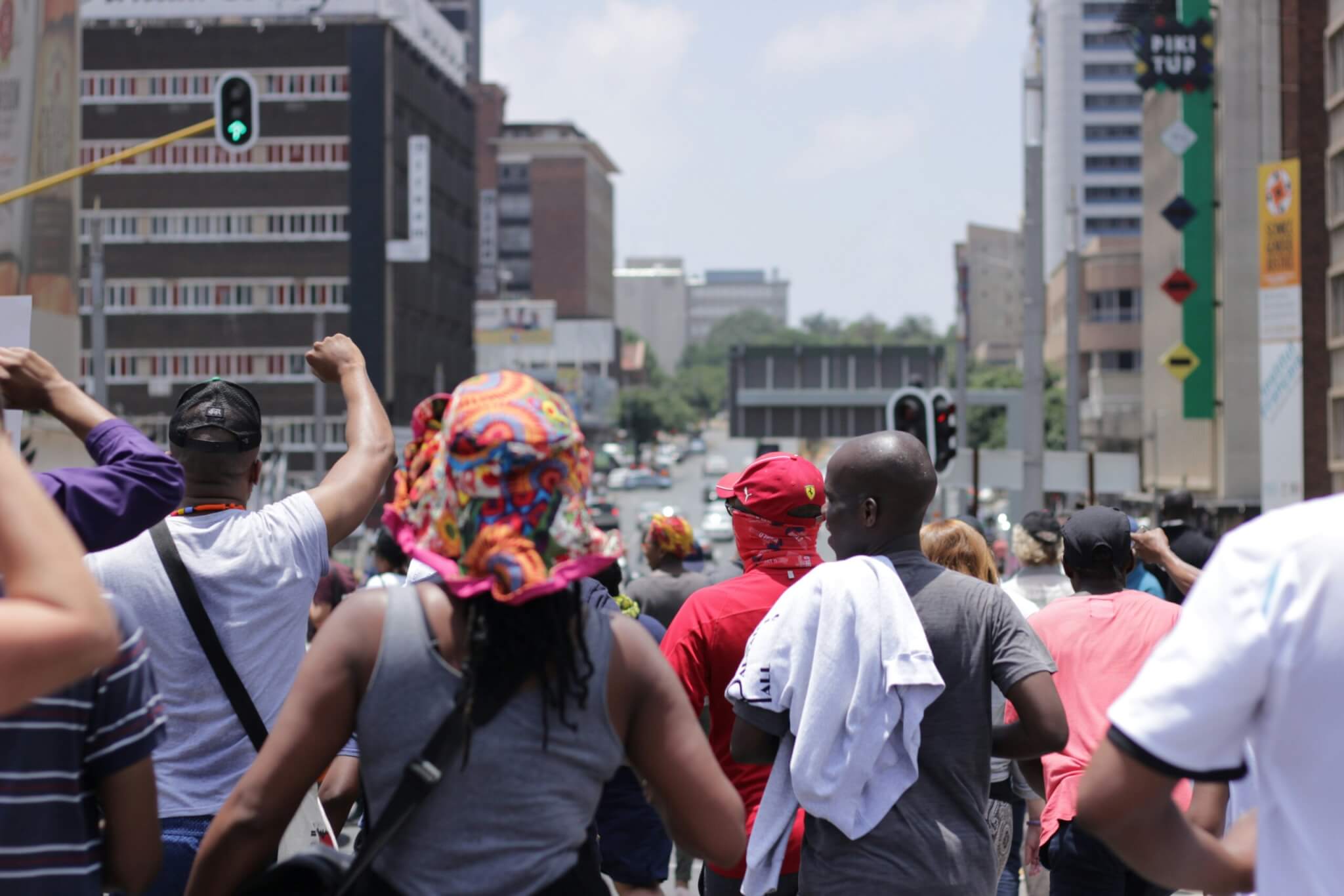
Photo by palesa on Unsplash
By Mandeep Singh Tiwana and Devyani Kacker, CIVICUS
At CIVICUS, we are increasingly being asked by funders how they should respond to this moment of civic regression.
Authoritarians are tearing up the rule book, threatening democracy and security. In less turbulent times, we could rely on democratic institutions and the rule of law to enable the collective wisdom of active citizens and civil society groups to prevail over those who oppose peace, justice, equality and environmental sustainability. But with only seven per cent of the world’s population able to exercise basic civic freedoms without fear of persecution, civil society’s transformational capacity is itself threatened.
This moment did not arrive overnight. Democratic freedoms have been declining for some time. A glance at the CIVICUS Monitor – a research collaboration that measures civic freedoms globally – reveals that over the past five years, civic space has been consistently deteriorating. Even democracies that once championed civic freedoms, like France, Germany, Italy, the UK and the US, are now rated as having ‘obstructed’ civic freedoms by the CIVICUS Monitor. Their legitimacy and will to defend human rights at home and abroad are diminished. This decline is partly linked to the rise of populist and nationalist movements and the enhanced influence of ultra-wealthy elites.
Civil society has been sounding the alarm for some time. But perhaps we have been too polite in our outrage and too cautious in our response. Supporters and funders have been content to speak the language of resilience (which became popular during the Covid-19 pandemic), when they should be talking about resistance in light of the resurgence of authoritarian-populist movements threatening to undo decades of progress achieved by civil society on equality, rights and justice. While resilience helps civil society survive a crisis, resistance enables an active response. For civil society, that means not only surviving but continuing to organise and expose the forces that prevent it from speaking truth to power.
Most of the freedoms and protections we take for granted today did not originate in governments, corporations or funders but in community organising. The right to vote, labour protections, environmental safeguards, and struggles for racial and gender equality were all advanced by citizens organising collectively. Civil society is the medium through which we centre values, challenge injustice, learn to act together, hold institutions accountable and participate in public life. Civil society is an essential part of democratic infrastructure, alongside independent media and the judiciary. The very existence of an enabled and empowered civil society helps foster peace, justice, equality and environmental sustainability.
Yet civil society organisations remain underfunded. They are often supported instrumentally, as vehicles for delivering programmes favoured by development agencies or philanthropists: health this year, gender the next, and climate the year after. These issues are deeply interconnected, yet uneven funding flows create silos that undermine progress. While many civil society organisations do not like to work within narrow thematic boundaries, funders’ incentives are often hard to resist, especially when organisations are pressed for resources.
Unfortunately, threats to civil society from hostile governments are rising at the same time, while some funders have begun to step back from the language of resistance and human rights. Consequently, funding has become cautious, conditional, and in some cases has disappeared altogether. But if civil society is central to democratic life, and if the idea of a thriving civic space is to be preserved, then this is precisely the moment when courage is needed. Philanthropy has a critical role to play and is uniquely positioned to act. It understands what is at stake and has both the means and, in many cases, the will.
Recognising civil society as a public good is easier said than done. To begin with, it requires philanthropy to rethink not only who and how it funds, but also whose voice it values, how it builds relationships and what it truly means to stand in solidarity with civil society. Below are some practical ways philanthropy can demonstrate that commitment:
- Invest in organisations, not just projects. Project-based funding has encouraged fragmentation and neutralised civil society’s power. Many funders prefer to invest in organisations’ activities rather than their mandates, relegating civil society to the role of service providers rather than independent agents. Funding civil society should be recognised as an end in itself, not merely a means to deliver projects. Moreover, it is vital that the voices of local civil society representatives are heard and factored into funders’ priority-setting.
- Recognise the intersectionality of rights and struggles. Organisations that once centred citizen action and actively resisted abuse of power are occupied with meeting targets, unable to ask the harder questions about accountability and power. For organisations working in communities or operating at the intersection of social norms and politics, neat distinctions defined by thematic priorities are meaningless as struggles for justice and inclusion overlap. Thus, it is vital for philanthropy to resource an organisation as a whole rather than just a few activities or priorities. This helps preserve the agency of civil society and enhances organisations’ ability to respond to emerging situations that intersect with their mandates.
- Resource local organisations directly with long-term flexible support. Resilience, as a term, needs unpacking. For a civil society organisation, it begins with the ability to plan and adapt to the external environment beyond grant cycles. Its purpose is to ensure that organisations can resist repression and defend the rights of the excluded. Philanthropy can support the conditions for resistance by making investments in reserves or through endowments that give organisations room to breathe, so they can avoid operating in a state of panic, and instead have the space to think, adapt and respond to changing circumstances.
- Invest in the ecosystem, not just organisations. Systems survive when both their individual parts and the connective tissue between them are strong. Yet, those connections can be overlooked when the focus is on activities, results and funding frames. Civil society depends not only on organisations, but also on the coalitions, networks, and umbrella bodies that convene and advance their collective interests. These connections can transform individual acts of resilience into collective resistance and should be supported accordingly.
- Weather the storm together. If civil society is an idea that needs sustenance, then philanthropy must move beyond agenda-setting and transactional grant-making. That means staying close even when differences arise, priorities diverge, outcomes are uncertain, or the politics become uncomfortable. Coalition-building is not restricted to civil society organisations alone. Funders, too, need to stand by their purpose and the ideas they have nurtured, despite the risk. In times of intensifying restrictions on civic space, solidarity must not be assumed; it must be intentional.
Civil society is an interwoven fabric of values and ideals that enables people to organise, question power, advocate for change and imagine alternatives. Ultimately, if philanthropy is wondering how to respond to this moment, the answer is rather simple: stand shoulder to shoulder with civil society facing pushback. Recognise civil society as a public good, and like all public goods, protect and nurture it accordingly. Then we can make the shift from resilience that merely withstands the headwinds to resistance that changes the direction of the wind.

Mandeep Singh Tiwana is Secretary General of CIVICUS, a global alliance of civil society organisations and activists dedicated to strengthening citizen action around the world.
Devyani Kacker is a human rights lawyer and a consultant with CIVICUS, working towards preserving civic space, civil society sustainability, and access to justice.