Philanthropy’s role in the fair transition to sustainable agriculture
By Hugo Hooijer and Mariana Wongtschowski, Porticus
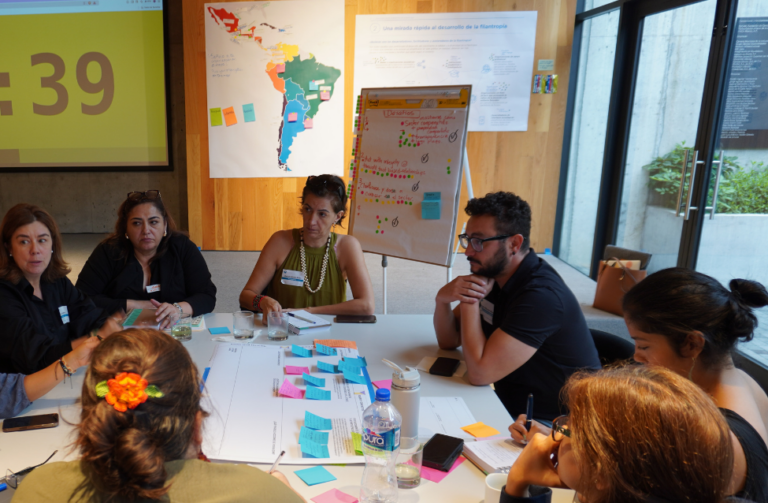
In our Fair Rural Transition programme, we take a two-pronged approach to achieve impact. The programme aims to help the agricultural sector move from unsustainable extractive practices to regenerative practices that benefit people and the planet. The two-pronged approach involves a focus on both policy makers and grassroots movements worldwide. Central to this programme is the participation of communities most affected. In this article, we will share some of the opportunities, challenges and lessons learnt in the programme’s first year.
The problem: unfair and unsustainable food production
Humanity is facing a climate crisis caused by emissions of greenhouse gases. Agriculture causes a quarter to a third of global greenhouse gas emissions. With its extractive production methods and fossil fuel powered machinery, agriculture consumes fertile land at a higher pace than the planet can restore. In addition, with its constant need for new land, the modern agricultural sector destroys forests, biodiversity and soil at a high pace. Directly adversely impacted are indigenous communities, small farmers and rural communities. In addition, further warming of the planet will impact vulnerable people first and foremost and, ultimately, all life on earth.
We believe that the only way this tide can be turned is to work with communities and organisations at the forefront of the climate and social crises. These actors need to be empowered to play a key role in pushing for radical policy change, increased pressure on companies in the food production chain and a redirection of funds.
Part of the solution: regenerative agriculture
There is an overwhelming amount of scientific evidence that shows food production can change to become a “nature-positive”1 sector, if extractive farming practices change into regenerative practices that also capture rather than mainly emit greenhouse gases, and that increase the fertility of the land and income to those living from the land.
|
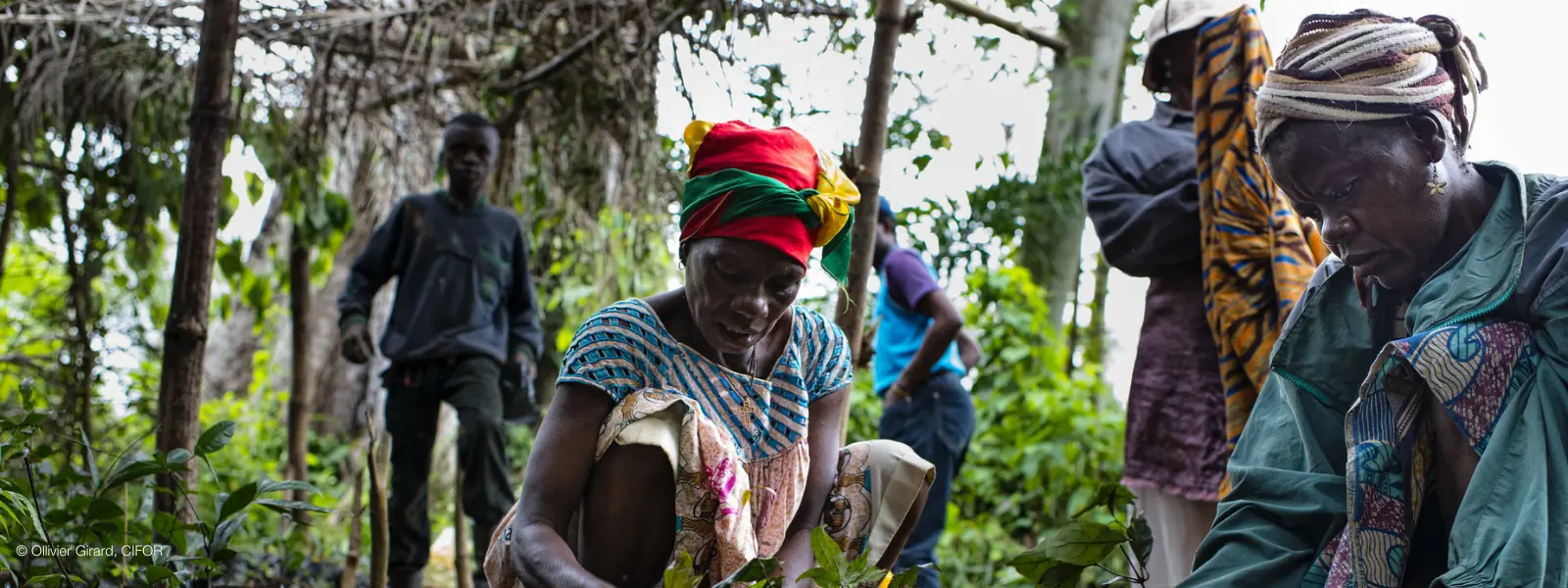
One example of a regenerative farming method is agroecology. Agroecology is the design and maintenance of agriculturally productive ecosystems which have the diversity, stability, and resilience of natural ecosystems – while also offering decent livelihoods to smallholders and their communities. |
Here is where our two-pronged approach comes in. Porticus supports both the grassroots movements as well as the NGOs involved in strong advocacy networks that influence policymaking.Here, we can learn from the knowledge and experience of indigenous people and smallholders. At the same time, we know that to speed up the global agricultural transition, we will need to enable smallholders to access new insights and evidence, and work alongside other stakeholders to bring regenerative practices to scale. This requires changes in local, regional and global food-related policies.
Bottom-up: supporting grassroots movements
Porticus has a long history of supporting local grassroots movements. Yet, in agriculture we are a relatively new kid on the block. We, therefore, work with intermediary funders such as the Agroecology Fund. This fund provides support to a global network of hundreds of locally-based groups. These groups, consisting of farmers and their communities, conduct real-time field research, construct new economy food systems, and apply political pressure to secure climate-friendly public food policies. These are the people – many of them women, youth, and Indigenous Peoples – who are building a new regenerative future, and whose voices need to be included to create better food and agriculture policies that serve the many, not the few.
What we particularly look for in partners such as Agroecology Fund is that they have institutionalised the participation of the people who are affected by and/or working on the transition. The Agroecology Fund has indeed invited community members to monitor and advise on their work. These advisors also act as ‘eyes on the ground’ for the Agroecology Fund, enabling them to rapidly act on new developments.
Top-down: advocacy for fair rural policies and funds
In addition to supporting on the ground change makers, we support NGOs and their advocacy networks that influence public policy and funding streams. Take for example the annual US$100 billion in climate finance that rich countries agreed to make available to support climate action in developing countries. The Green Climate Fund (GCF), set up by 194 governments, is one of the main instruments for channelling climate finance to developing countries. To ensure that these funds are spent wisely and efficiently, they must be disbursed with the involvement of the people affected. One of our partners is Both ENDS, an NGO that connects representatives of rural communities to global fora, such as GCF as well as the UNFCCC, the World Bank and other institutes. Both ENDS’ aim is to make sure that global funding actually reaches vulnerable communities in developing countries and brings regenerative agriculture to scale.
|
The Green Climate Fund (GCF) is one of the world’s largest climate funds, mandated to support developing countries in realising their Nationally Determined Contributions (NDC) towards low-emissions, climate-resilient economies. |
Reflections
We only started to implement this approach a year ago, but we have already learnt that putting grassroots movements in the driver’s seat takes courage and that working with intermediaries places us at some distance from the programme’s results. We experience challenges in monitoring and evaluating the impact of our contributions, both on the grassroots as well as on the advocacy level. Our philanthropy peers will recognise that measuring and evaluating effects in this highly complex environment remains tough. Yet, we are convinced that this two-pronged approach involving the communities affected, is the only way we can implement effective and fair solutions to the climate crisis. At the very least, this approach increases the levels of accountability in policymaking and funding. We believe that, with effects on funds as large as the Green Climate Fund, this in itself is an impact worth making.
For any questions, feel free to contact Hugo Hooijer, Global Programme Manager Fair Rural Transition, Porticus
_________________________
1The G7 has recently used the term “nature-positive”, further defined by the World Economic Forum as a “enhancing the resilience of our planet and societies to halt and reverse nature loss.”. See: G7 2030 Nature Compact, at: https://www.consilium.europa.eu/media/50363/g7-2030-nature-compact-pdf-120kb-4-pages-1.pdf and WEF, What is ‘nature positive’ and why is it the key to our future?. At: https://www.weforum.org/agenda/2021/06/what-is-nature-positive-and-why-is-it-the-key-to-our-future/.
Mariana Wongtschowski is a Brazilian agronomist, with an MSc from Wageningen University, the Netherlands. Early in her career, Mariana worked with traditional communities in Brazil, focusing on the sustainable use of natural resources. Thereafter, she worked as a policy officer for the Ministry of Foreign Affairs, the Netherlands. At the Royal Tropical Institute (KIT) she managed several programmes and networks on agriculture research and development and farmer-led innovation, in Africa, Asia and Latin America. Since 2017, she works for Porticus, private philanthropy, where she serves as Director Caring for the Earth, overseeing the work on Forests, Energy, Purposeful Business and Fair transition.
Hugo Hooijer is a political scientist, with an MSc from Radboud University in The Netherlands, and an MA from Roehampton University in the UK. Hugo has worked with several NGOs in the field of agriculture and climate. With Friends of the Earth, he led national and international campaigns to make food production more sustainable. With Oxfam, he worked on a global advocacy programme to connect smallholder farmers in developing countries to international finance. He has been with Porticus since 2020, leading the Fair Rural Transitions programme.