Trends in closing space grant-making: is there a role for Philanthropic infrastructure?

By Deborah Doane, outgoing Director, Funders’ Initiative for Civil Society
Ten years ago, who would have expected the phrase ‘closing space for civil society’ to gain so much attention within the funding community? Not everyone agrees with the use of the phrase, but it’s become quite clear that the phenomenon it tries to encapsulate – repressions of civil society, from basic administrative burdens, through to direct government-backed attacks — shows no immediate signs of relenting.
Late last year, the Funders’ Initiative for Civil Society (FICS)* sought to get a better sense of how funders had adapted to the trend, which we saw as being effectively ‘the new normal’. What we found shouldn’t surprise anyone, but it did underscore just how prominent the issue has become and how important it is that we step up our game. Some of the highlights included:
- 93% of our online survey respondents said that grant-making had become more challenging in the past 18 months alone and a vast majority (78%) felt that they weren’t yet doing enough to address the issue.
- Funders are still focussing on diagnosis of the problem rather than solutions, with funding of reports rather than actions dominating grant-making. Moreover, the bulk of these reports concluded, like a broken record, more or less the same thing: civil society needs core, flexible and long-term funding.
- That internal issues, like risk or capacity, are actually the biggest barriers to funding more work in this area, rather than a lack of ideas of what to fund.
We also were able to identify some key trends amongst those actively seeking solutions, such as:
- Funders are looking towards more bespoke and localised answers, focussing on national or sub-national opportunities in areas such as ‘constituency building’ or domestic philanthropy development.
- The battle for civil society space is increasingly online: internet shut downs, surveillance and AI are all growing areas for funding interest.
- Work on narratives and framing around the value of civil society, is currently in vogue. Yet while there’s new investment here, results are a ways off.
- As attacks on traditional civil society grow, funders are broadening their definitions of civil society – looking for new groups and individuals to support, from social movements to social enterprises.
What does this mean for philanthropic infrastructure? As it happens, quite a lot.
Some funders told us that they’re more interested in their own advocacy power now, showing more willingness to speak to governments, especially in the west. As one funder said: “when we started this work, the word advocacy was anathema. Now there is much more.” Affinity groups have the ability to coalesce the voices of the funding community – either nationally or internationally. Wings is already doing this in its support for advocacy with the Financial Action Task Force – a key institution that has been at the forefront of legislation that sees civil society groups labelled as ‘terrorists’. There’s clearly scope for more, too.
Epxanding philanthropy was also identified as an under-resourced opportunity, from more pooled funding, modelled after the European Civitates fund, run by NEF; to better support for local, national and regional grant-makers who understand the local context. Growing funding locally requires investment and better legal frameworks too, all of which require the capacity to engage in collective advocacy.
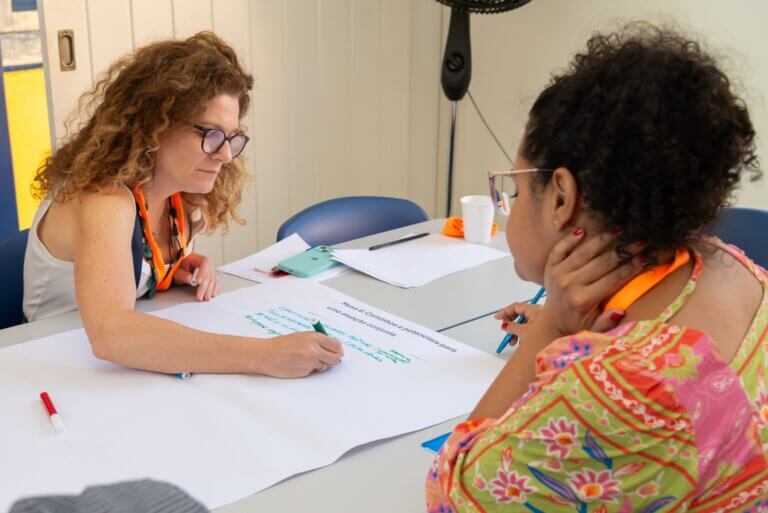
There’s a final element, which is that of convening. FICS has been helping funders and civil society groups to co-create national level strategies to push back against closing space. In our 3 pilot projects, which are currently being evaluated, we’ve learned that these are challenging to do. For one, funders need to shed their power, and civil society needs to acknowledge that they don’t have all the answer either. But we have started to demonstrate real commitment and actions through these endeavours, which we’ll report on at a later date. Affinity groups could play a pivotal role in sharing learning and helping to convene more strategically on this issue.
Many of these things are easier said than done, of course. But the key takeaway is that solutions are plentiful – putting them into action is the hard part.
*The Funders’ Initiative for Civil Society is a donor collaborative, established in 2016 to bring greater understanding of how the philanthropic sector can respond to closing civil society space. For further information contact FICS@global-dialogue.eu

Deborah Doane
outgoing Director at Funders’ Initiative for Civil Society