Non-profits at risk: how a philanthropy support network protected Colombia’s enabling environment
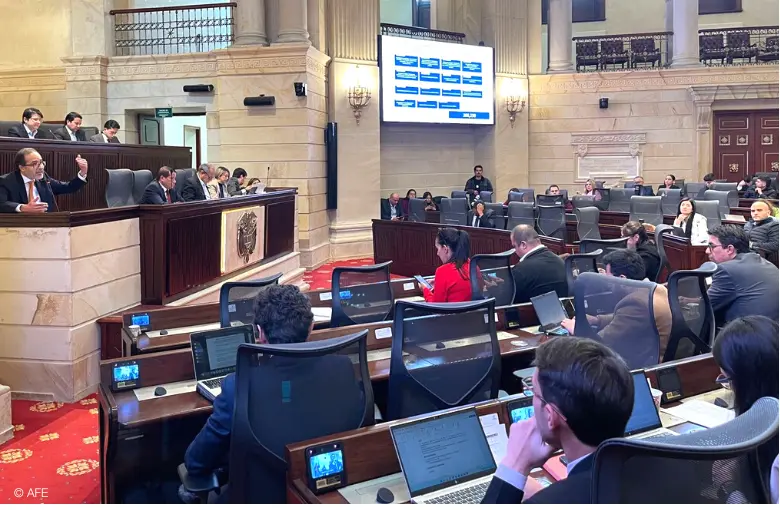
Cover photo from AFE
By Aura Lucía Lloreda, Executive Director at AFE – Asociación de Fundaciones Empresariales
Since August 2022, Colombia has had a new government. It is the first time in history that a left-wing president is in office. During his first 100 days, Gustavo Petro, the newly elected president, set the tone for his next four years in office. His first actions included major fiscal, political and social projects to be presented to congress.
Quickly after his inauguration, the Colombian media began to report the publication of the first version of a tax reform “for equality and social justice”. The speed of this reform came as a surprise to many. With the government’s first proposal, the reform intended to raise more than five million dollars, which is why it sought to tax Colombians with higher incomes, punish evaders more severely, and reduce some tax benefits which some companies use excessively.
Non-profits at risk from fiscal reform
The fiscal reform project sought to limit tax benefits for donations made by legal persons to non-profit entities of the Special Fiscal Regime1 by modifying Article 14 of the Fiscal Statute.
The modification of this article would negatively affect the existence of NGOs in the country since for most of them, donations represent more than 80% of their yearly income2. For example, out of the 73 foundations that belong to the Association of Family and Corporate Foundations – AFE, 25% of their incomes come from corporate donations.This tax reform would discourage donations and put at risk many organisations which have a significant impact on the country’s social and economic development.
To prevent this situation from happening, AFE, together with the Colombian Confederation of NGOs – CCONG and with the support of Suma Social (a programme funded by USAID) began an advocacy strategy to raise awareness about the situation of NGOs and the devastating social impact this reform could have.
After the article’s approval in the first debate of congress, our advocacy increased significantly. We held various meetings with congressional leaders from different political parties and government officials and even participated in a public debate in congress to share our thoughts about the proposed fiscal reform.
Business associations, union leaders and young entrepreneurs participated with us in this debate. It was our opportunity to show what the limitation of 5% of fiscal benefits meant for the non-profit sector.
Juan Carlos Jaramillo, AFE’s fiscal advisor, gave a speech focused on showing the importance and scope of foundations and non-profit organisations’ work in the country. He highlighted how many of these social organisations are often based in or address issues in territories with a lack of government presence, thus providing very needed services to society.
He outlined five critical messages:
-
Non-profits do not seek profit but this does not mean they should be condemned to making losses. Reforms like the one proposed would stop non-profits from being autonomous organisations that can sustain their actions and work over time.
-
The government should not generalise when talking about non-profit organisations and make it seem that it is a common practice that non-profits are used to evade taxes, especially when Colombia has been working for many years to stop tax evasion. It does not make sense that the government now wants to introduce new regulations that prevent donations.
-
Imposing limits to donations has a direct impact on non-profits’ financial sustainability. Since a large percentage of foundations and projects survive thanks to donations, limiting them would have negative consequences as the number of beneficiaries would decrease and some projects would need to be shut down.
-
New limitations go against fiscal equity. In the initial proposal of the tax reform non-profit organisations and political parties were excluded, so it doesn’t make sense to include non-profits again.
-
Non-profit organisations want to work together to review and find more effective control measures to decrease tax evasion, but establishing more limitations is not the best way.
The turning point
On November 2, we were all waiting nervously for the vote. The senate was voting on the fiscal reform with some modifications made after the first round of debates. We had done everything we could and were hoping for a positive outcome.
During this second debate, the senate voted in favour of withdrawing the limitation of benefits for donations made by companies to non-profit entities. This was the result of the advocacy strategy from AFE and our allies!
Now, after this successful result, we are working with the government so they can see the non-profit sector as an ally for their social agenda. We are the voice for communities where the state is not present or provides very precarious services. Philanthropy is also a trusted voice in the most vulnerable territories in Colombia, as we understand their needs and work with them to find long-term solutions.
The situation in Colombia
Currently, Colombia has 208,230 non-profits organisations, of which 68,297 are sectoral, population, and territorial organisations (associations, corporations, foundations, federations, and confederations); of these, 270 are social organisations that are part of the AFE and the CCONG. Moreover, non-profits have generated more than 30,000 jobs in Colombia, according to our research and data.
In 2021, non-profit organisations contributed to the demands of approximately 10,400,000 people in Colombia, they received more than USD 92 million dollars in donations and operate across the country. For example, 184 foundations from AFE and CCONG work in rural areas in the production of goods, rural development, financial and technical assistance, advocacy, research and education, and 247 organisations work in urban zones in democracy, peace-building, housing, income generation, and sports and culture promotion.
AFE is committed to protecting the enabling environment for philanthropy in Colombia. We will continue to strengthen ties with the executive and legislative power, strengthen the current regulations of the non-profit sector, and increasingly improve the environment for the favourable development of philanthropy in Colombia.
——————————————–
1. The proposal aimed to add article 259-1 in Article 14 of the Fiscal Statute, which includes the entities (non-profits) belonging to Article 257 of the Fiscal Statute.
2. All data comes from the work of AFE an CCONG, for more information contact them directly.

Aura Lucía Lloreda, Executive Director of the Association of Family and Business Foundations – AFE is a political scientist from Universidad de los Andes with a Master’s Degree in Administration and Public Policy from Columbia University in New York. In the private sector, she led the implementation and execution of social and corporate responsibility and social investment processes for different multinational organizations and the strategic relationship with different audiences, strengthening reputation and organizational positioning.
In the public sector, she was Director of the National Family Welfare System of the ICBF, developing strategies for an effective relationship between nation and territory for the implementation of public policies on early childhood, childhood, adolescence and family strengthening, consolidating a multidisciplinary team of 300 people at the national and municipal levels.
To get first access to our blogs every month, subscribe to our newsletter here.