Moving Beyond Privilege: A 21st Century Mandate for the Philanthropy Sector
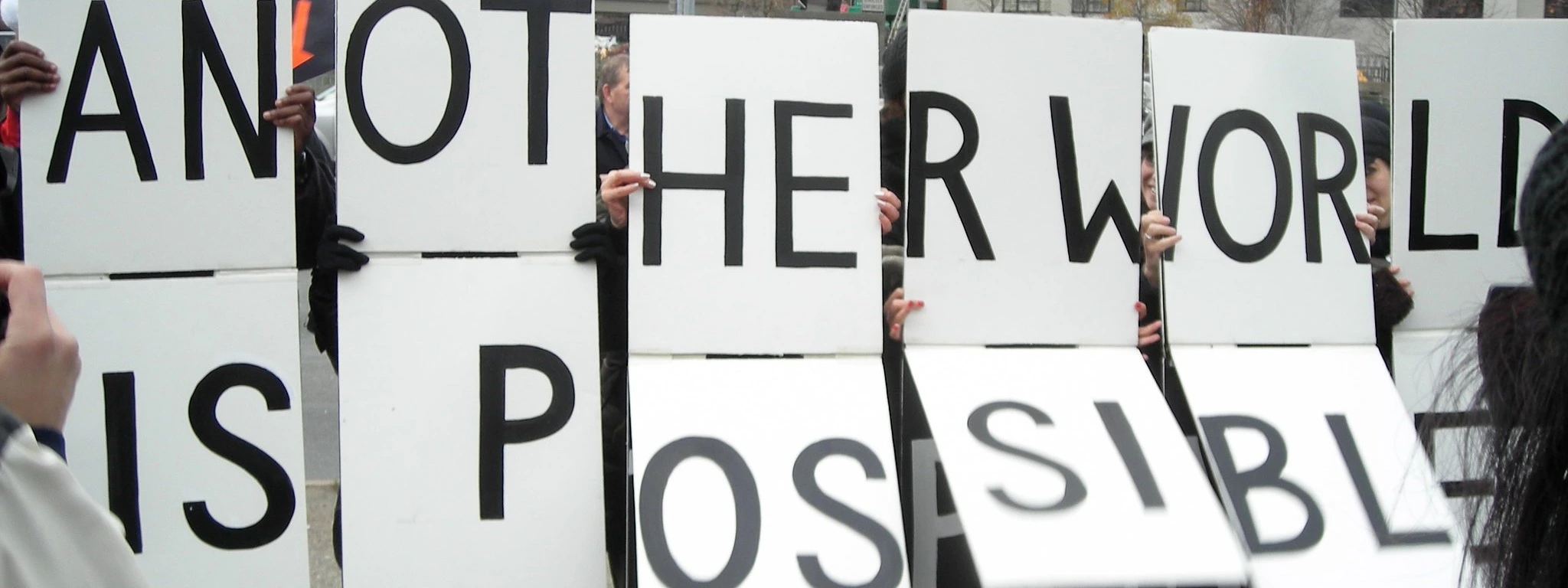
Photo by Pamela Drew on Flickr
By Richard Marker, Founder, Institute for Wise Philanthropy
In this post, I explore one critical aspect of the profound changes and challenges reshaping philanthropy today. Much has been written about the horrific implications of the elimination of USAID funding [and similar cutbacks elsewhere]. However, the shift of attention from the concentration of decision-making and funding in the Global North to the Global South began some time ago. Some of that is a belated nod to the extractive reality of wealth accumulation and power in the Global North. It also acknowledges the authenticity of community integrity, seen in the mandate for many funders to grant only if there is local participation. Equally important is the development of substantial new wealth holders in the Global South, which will inevitably play a role in this century’s balance of power. And all of this change is happening as funders in too many places are defensively confronting what our role should be, as governments place increasing limitations on civil society.
Implied in all of this is a dynamic tension long inherent to philanthropic decision-making – one that has been an essential component of my approach as an educator of funders for over a quarter century. The core underpinning of this approach is that there are many equally legitimate values, cultures, and considerations that inform all philanthropic decision-making. They can even be in tension, at odds in profound ways, yet both can be legitimate. Essentially – and historically – the choice of approach has been at the exclusive discretion of a funder. A few examples:
- Are we stewards of precious resources, tasked with preserving wealth across generations? Or should our mandate be as change agents, boldly using our autonomy to drive transformative change? Which other sectors have the autonomy of governance and financial resources to take the risks to bring about much-needed change and progress in our communities and nations?
- Similarly, should our motivations stem from noblesse oblige, the recognition that with wealth comes the responsibility to give back? Or should our criteria be to effect change, create an impact, and measure results? They are, of course, not mutually exclusive, but they represent very different driving forces for where and how we give.
- Another: Many in our field currently celebrate the value of trust-based giving and community/participatory decision-making. I am among them. Yet it is still largely the funder’s choice to trust grantees fully with resources, or to invite them to share in making decisions about their use. Even when others besides the funder are invited to participate, how often do funders share our governance role?
- One more illustration, among many: Are we committed to collaboration, or would we prefer to address social needs on our own? At first blush, most are inclined to think that the leveraging of collaboration is superior, but how many funders are willing to surrender some of our decision-making autonomy or processes to others?
In all these examples, one can make a persuasive case for either approach. Each represents an authentic philanthropic strategy. In my teaching and advising for many years, I have consistently taken the position that each approach is appropriate as long as there is self-awareness and understanding of the tradeoffs and implications.
However, at this moment in history, I find myself asking: Should autonomy and nonjudgmental approaches still apply?
The acceptance of all approaches needs to be questioned. After all, the challenges we face at this moment in history range from the existential – climate change mandated migrations; food insecurity and poverty resulting from misguided economic systems; and, politically, the rejection of the liberties purportedly promised by modernity; the narrowing of the parameters of civil society; and even the question of the continued credibility of the nation-state as THE primary organising structure.
In this context, one might [and perhaps one should] argue that philanthropic entities no longer have the luxury of acting with complete autonomy, making decisions based only on a funder’s interests and disconnected from their long‑term impact. Is it acceptable to continue to fund from the perspective of subjective interest instead of objective need?
In addition to the extraordinary objective needs mentioned above, we also have other tools. More than at any time in the history of philanthropic giving, our field has developed methodologies to determine probable impact of our giving; to evaluate whether grants have accomplished what was intended; to have a perspective on what may be cutting edge thinking versus transient fads, and to contextualise our decision-making in the context of others in the field and other stakeholders. Many thoughtful funders already use those tools in some ways, and many more know that those tools exist for their use.
In most places in the world, the legal structures that enable philanthropic vehicles endorse that these vehicles should exist for the ‘public good’. To be sure, those legal structures and conditions vary widely, and even the very vocabulary may connote very different meanings. But at the base, we believe, and most places affirm, that money set aside to do good should be used for the public good.
However, who should mandate these priorities? We know all too well that State actors in too many places would just as soon restrict the definition of public good to political advantage. We surely have seen the abuse of government-approved open-ended funding to bring about undesirable social change. End-user beneficiaries, the ones who are the reason we exist, are stakeholders as well, but are too diffused to enforce a coherent and consistent set of policies.
So, it is incumbent upon us, as funders, to impose a set of standards, priorities, and expectations on our field, on ourselves. We can and must apply professional and social norms to our fellow funders and the organisations we support. If we are to respond with any alacrity and effectiveness to the fragile state of too much of the world, we need to accept that we don’t and shouldn’t act alone, that our full self-legitimating autonomy may be an indulgence we cannot now afford or justify. Philanthropy holds an extraordinary privilege — one no other sector has. Let’s use it wisely and hold ourselves to the highest standard. These times demand nothing less.

Richard Marker has been educating and advising funders around the world for 25 years. He is the founder of the Institute for Wise Philanthropy, an international philanthropy education and advisory group. He also serves as the Faculty Co-Director of the University of Pennsylvania’s High Impact Philanthropy Academy. Prior to joining UPenn, he was the founder of the NYU Academy for Funder Education, the first professional certificate program of its kind.
To get first access to our blogs every month, subscribe to our newsletter here.