Acting Together: Reflections from the First Lift Up Philanthropy Training of Trainers Cohort
By WINGS
When we inaugurated the first-ever Acting Together to Lift Up Philanthropy – Training of Trainers (LUP ToT) course in September 2025, our intention was to equip a global group of ecosystem builders with practical tools to map and strengthen philanthropy support ecosystems, and to create a space where the complexity of this work could be confronted honestly, collectively, and with generosity.
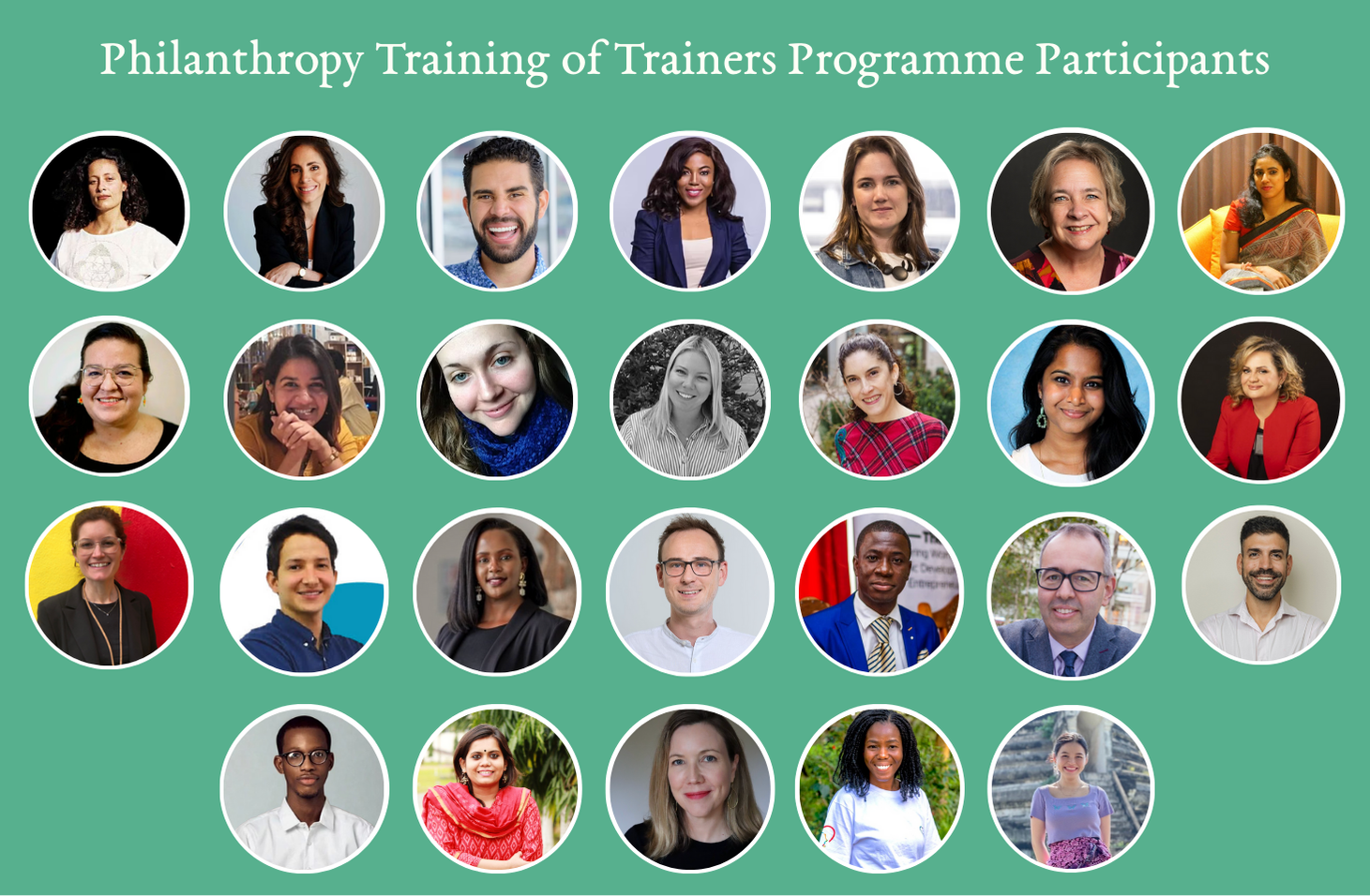
Over the past two months, 26 participants from more than 20 countries came together regularly, stepping into a learning space to test frameworks, question assumptions, confront language, map power, and – most importantly – to build trust across different contexts.
This inaugural cohort has now completed the programme, and the reflections emerging from the experience show both the promise and the necessary tensions of philanthropy ecosystem building today.
Why we created the Lift Up Philanthropy – Training of Trainers (LUP ToT) course
Philanthropy Support Ecosystem (PSE) is the community of interacting organisations, functions, and activities that enable philanthropy to reach its full potential by nurturing its capacity, capabilities, connections, and credibility. Mapping and strengthening these ecosystems helps identify the key actors, relationships, and functions that support giving, highlight both strengths and gaps, and guide stakeholders toward a shared agenda for collaboration. When done well, PSE mapping becomes a pathway for collective action, helping local actors set priorities, mobilise resources, reinforce partnerships, and build a stronger, more coherent environment for philanthropy to flourish.
In recent years, WINGS members across regions have indicated a need for deeper, practical support on ecosystem building, not only in mapping philanthropy support ecosystems but also in adapting the methodology, facilitating complex conversations, and guiding stakeholders through collective decision-making on the next steps after an ecosystem has been mapped. The course was developed in response to this demand, shaped by the original ‘Acting Together to Lift Up Philanthropy’ framework launched in 2021, and refined through lessons learned from over a dozen regional and national mapping efforts.
At its heart, the course attempted to answer two fundamental questions:
- How do we create shared understanding when language, context, and histories diverge?
- And how do we ensure ecosystem mapping becomes a pathway to collective action, not a static report?
These questions guided our conversations throughout the months.
A global cohort, a shared challenge: language, power, and meaning
From the first module, participants identified a recurring difficulty: even our most familiar terms, such as ‘ecosystem’, ‘philanthropy’, ‘support organisation’, and ‘infrastructure’, carry different meanings depending on one’s perspective. As Lisa K. Schalla from Connecting Communities in the Americas (CCA) put it, “I struggle with attempting to design common frameworks when language and meaning are so locally rooted.” However, rather than shy away from this tension, the cohort leaned into it. Conversations around the West Africa case study, for example, highlighted the limitations of established taxonomies and how definitions can render locally embedded practices invisible. Others noted how labels can shape (or distort) power, and how national contexts are often misinterpreted when viewed through external or donor-driven frameworks.
Through these exchanges, what began as frustration became an opportunity: a chance to build a shared vocabulary together, grounded in lived realities rather than imposed categories. “Yet this training course has provided the opportunity for us to come together across countries to bring precisely this tension to the forefront of philanthropic dialogue”, said Lisa K. Schalla.
Learning in motion: what the cohort explored
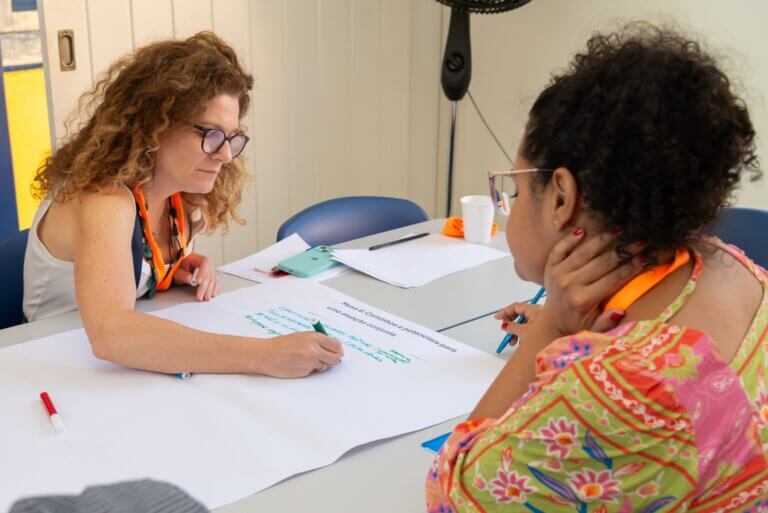
Across six sessions, combining plenaries, breakouts, exercises, and peer coaching, participants dived into the full spectrum of ecosystem mapping, such as:
- Diagnosing philanthropy support ecosystems using the 4Cs framework: capacity, capability, connections, credibility
- Practising taxonomy adaptation, based on interviews and literature reviews
- Facilitation skills for mapping exercises, visioning, and roadmap creation
- Testing coordination tools like Kumu to visualise various actors and relationships
- Analysing governance structures, power dynamics, and the role of steering committees
- Connecting mapping outputs to decision-making and long-term system strengthening
Several participants highlighted the practical benefits of this approach. For example, “The 4Cs framework deepened my understanding of how strengths, gaps, and linkages shape an ecosystem anchored in trust and inclusion”, said Josephine Atuhaire from CivSource Africa. “The breakout sessions and exercises helped us test the tools in real time”, said Ilaria De Cave, Assifero. And Lisa Schalla from CFLeads reflected, “This training is reshaping how I design learning opportunities and strengthen multi-country networks”.
Others emphasised how the tools are already proving useful in their daily work. “It is already apparent how useful it will be in a variety of contexts where I am engaged, providing a road map for some critical work that has already been identified in one context while suggesting tools and methods for refining the process of mapping to build and strengthen an ecosystem,” shared Sarah Candio of NEID Global.
These insights reflect the heart of the ToT design: learning by doing, with peers, and in context.
What participants will take forward
Across the cohort, three themes emerged consistently in the final reflections:
- A stronger sense of community and shared purpose: Many participants emphasised how rare and valuable it is to have a truly global space where philanthropy leaders can interrogate frameworks, compare practices, and hold critical conversations about power. “I have gained a wider perspective of the philanthropy ecosystem thanks to the participation of people from very different regions and backgrounds,” said Verónica Melzi from Alianza Peruana de Fundaciones y Asociaciones.
- Deeper facilitation capacity: Participants are now applying what they learned to strengthen their own organisations and networks by designing new capacity-building programmes, mentoring colleagues, adapting mapping tools for national ecosystems, and integrating ecosystem analysis into grantmaking and partnership strategies. The participants are already using the LUP and 4Cs frameworks to lead internal learning journeys and prepare for national-level mapping processes. As Ho Thi Xuan Ngan of SecondMuse summarised, “From this training, I have strengthened my learning through deeper knowledge in philanthropy and facilitation, gained clarity on ecosystem gaps, and built stronger connections with a global community”.
- A clearer understanding of ecosystem building: The course created space to grapple with real-world tensions, including donor influence, shrinking civic space, inequities in resourcing, and the challenge of representing complex local realities within global frameworks. For many, this surfaced a renewed commitment to centring local leadership and adapting methodologies with humility. “One key challenge that remains for me is determining how broadly or narrowly to define the boundaries of an ecosystem,” shared Marija Mitrovic from the Trag Foundation, noting that the training helped her to think about the balance between inclusion and focus.
Beyond reflections, participants also shared concrete plans for applying the tools directly in their work. Several intend to initiate or refine national-level mapping processes, including in Australia, where Philanthropy Australia aims to explore launching a PSE mapping exercise aligned with its 2026 strategy. Others are already adapting components of the LUP and 4Cs frameworks to ongoing initiatives, such as CivSource Africa, which will integrate ecosystem analysis into its Community Foundations incubation programme, and NEID Global, where the tools will serve as a roadmap for strengthening collaborations. Participants from Latin America plan to convene regional peers to localise the methodology further, while others, such as those from SecondMuse and the Trag Foundation, will utilise the frameworks to refine facilitation approaches, define ecosystem boundaries, and align mapping practices across countries. These examples illustrate how the cohort is already translating the learnings into concrete actions within their organisations and regions.
Looking ahead: building a global community of ecosystem facilitators
This inaugural cohort marks an important milestone for WINGS. It demonstrates the demands and needs of a global learning community dedicated to strengthening the ecosystem that enables philanthropy to flourish.
Over the coming months, WINGS will create an alumni network for ongoing peer exchange and collaborate with participants on future case studies and mappings. We will continue to refine tools and methodologies based on cohort feedback and develop an impact brief summarising how the learning from the course is being applied. This will help us prepare for the next cohort in 2026.
We look forward to continuing this journey with this and the upcoming cohorts, with our network, and with all those working to build stronger, more connected, and more coherent philanthropy ecosystems across the world.
If you have any questions regarding the course or our mapping frameworks, please reach out to us communication@wingsweb.org.
To get first access to our blogs every month, subscribe to our newsletter here.