
When Rain Doesn’t Come: Why Philanthropy Can’t Wait for the Next Disaster
By Gugu Nonjinge and Dimitri Selibas
Philanthropy has often responded with generosity once disaster strikes, but the harder and more useful task is acting before the next crisis arrives. South Africa faces that moment now. The country has barely finished counting the cost of recent floods, yet El Niño has returned earlier than expected and is likely to shape the summer rainfall season into early 2027. For communities still rebuilding after repeated extreme weather, this is not a technical note in a weather bulletin but a countdown. Philanthropy can act before it becomes a headline by supporting preparation rather than funding recovery.
A familiar pattern, an unfair distribution
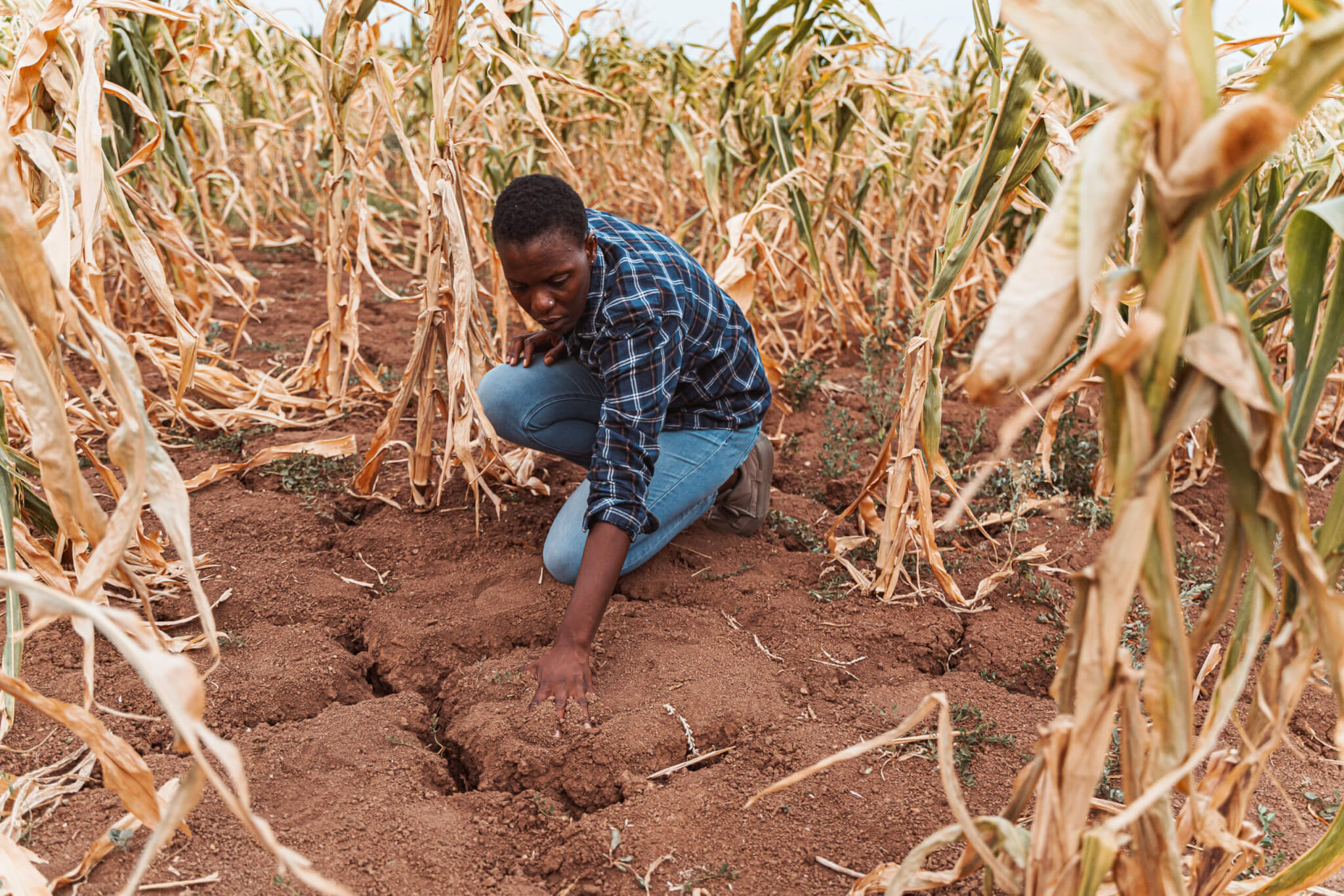
As South Africa’s summer-rainfall provinces dry out, people without savings, insurance, or backup boreholes will suffer first. Subsistence farmers will watch maize wilt before it tassels, informal settlements already facing water rationing will come under greater pressure, and livestock-dependent communities will have fewer grazing options than large commercial operations. El Niño does not create inequality; it exposes it. The communities at greatest risk are often the last to receive formal disaster assistance, if they receive it at all. With forecasters warning that this El Niño could become severe by late spring, the urgency is clear. South Africa has seen maize losses of up to 60% in some areas and droughts whose effects lasted for years, long after public attention moved on.
In a country where nearly a third of young children are already stunted, a failed maize crop is not only an agricultural loss but a development one too, bringing higher food prices, thinner diets and children whose futures narrow before they reach a classroom. Climate shocks of this kind quietly erode the very human potential South Africa needs to become prosperous and resilient. What looks like a bad season is, over time, a tax on the country’s future.
Where government can’t do it alone
This is the gap the Independent Philanthropy Association South Africa’s (IPASA) Funder Commitment on Climate Change is meant to close. It is the first pledge of its kind on the continent and the tenth globally, as part of the Philanthropy For Climate movement. It asks independent funders who have long seen themselves as working in education, health or gender justice to accept that none of those mandates sits outside a crisis that touches all of them.
Climate action in South African philanthropy has mostly been treated as someone else’s job, left to the environmental foundations. A funder backing early literacy cannot claim that a drought-driven food price shock has nothing to do with whether a child can concentrate in class on an empty stomach. Climate has stopped being a sector in its own right; it is the ground on which every other sector stands. The same goes for skills. The Just Energy Transition (JET) is one of the few places where new opportunities are being created in regions with the highest levels of joblessness, and preparing unemployed young people to take them up is climate work and economic justice work at once.
With 12 signatories so far, it is fair to ask what a pledge on paper does for a family staring at a dry borehole in the North West. Very little, unless meaningful funding follows quickly. Philanthropic funding is a fraction of what government and international climate finance can move, but it has an advantage both have struggled with: speed. It can fund flexibly and reach communities that formal disaster response tends to reach late. That advantage matters only if funders act before the crisis peaks, not after the headlines do.
What early progress shows
IPASA has committed to publishing regular progress reports on what signatories do after signing, which is the substance of the pledge’s eighth pillar on transparency. The first report, drawing on a self-assessment by all twelve signatories, offers an early but revealing picture.
The headline is not scale. Twelve signatories is a modest number compared with the hundreds who have signed older pledges in Europe and North America. The more interesting finding is what those twelve are doing. All 12 signatories report activity across all eight pillars, and most describe climate work that was already underway before they signed, often without being named as such. A food security programme turns out to be a form of climate adaptation. A rainwater tank at an early childhood centre turns out to be resilience infrastructure. The pledge’s first effect has been less about launching new work than about helping funders recognise the climate dimension of what they already do and then deepen it.
That deepening is visible where philanthropy can move quickly: integrating a climate lens into existing strategies, committing resources, and building climate literacy among grantees and partners. Signatories rate these as the most accessible and most impactful. The harder work remains, such as aligning endowments with climate goals or reducing operational footprints, where technical demands are greatest, and returns are least visible. The report treats these as the focus of the next phase, not as failures.
Two features of this group stand out. Half are intermediaries and re-grantors rooted in the communities most exposed to climate shocks, so the pledge’s reach extends well beyond twelve names, cascading into hundreds of community organisations. And several are connecting South African philanthropy to a wider Global South movement, comparing flood responses across borders and exchanging knowledge on what community-led adaptation looks like. None of this is yet at the scale the crisis demands, but the direction is clear. Funders are moving from intent to practice, from implicit to intentional, and from working alone to working together. The measure that matters now is pace.
Urgency isn’t a talking point
Climate philanthropy cannot become ceremonial: a pledge, a panel, a report, then silence. With planting season already underway in parts of South Africa, adaptive finance and contingency funding must reach farmers before favourable soil moisture disappears – not after the maize belt begins to fail.
The same urgency applies beyond agriculture. Municipal water systems, heat-stressed clinics and informal workers whose incomes depend on predictable weather all need support now, while there is still time to reduce harm.
Global climate finance is still too slow and too small for what developing countries need. South Africa cannot wait for that system to work as promised. If the IPASA commitment means anything, it must mean local philanthropic capital moves now: faster, closer to the ground and before the next disaster is inevitable.
The pledge also connects South African funders to global networks such as Philanthropy for Climate and WINGS. Philanthropic networks turn commitments into action by connecting funders, strengthening local capacity and amplifying Global South expertise. For example, Hlanganisa Community Fund shares locally grounded adaptation knowledge across South Africa, Malawi and Brazil, helping communities build on Indigenous knowledge and climate-smart practices. Similarly, the Environmental Justice Fund’s collaboration with Alianza Fondos del Sur connects community-rooted environmental justice work to wider global platforms, including the Global South House initiative at COP30 and London Climate Week. Together, these examples show how networks enable peer learning, strengthen community voices and bring locally informed solutions into international climate discussions, making the philanthropic ecosystem a practical driver of collective action.
Success will be measured not by the pledge, but by whether communities are better protected when the rain fails. That requires stronger local capacity to design durable, context-sensitive solutions and continued global connections that expand the resources and knowledge available to South Africa.